Confetti at 2AM: The Night Crew Who Dismantle the Show After You Leave
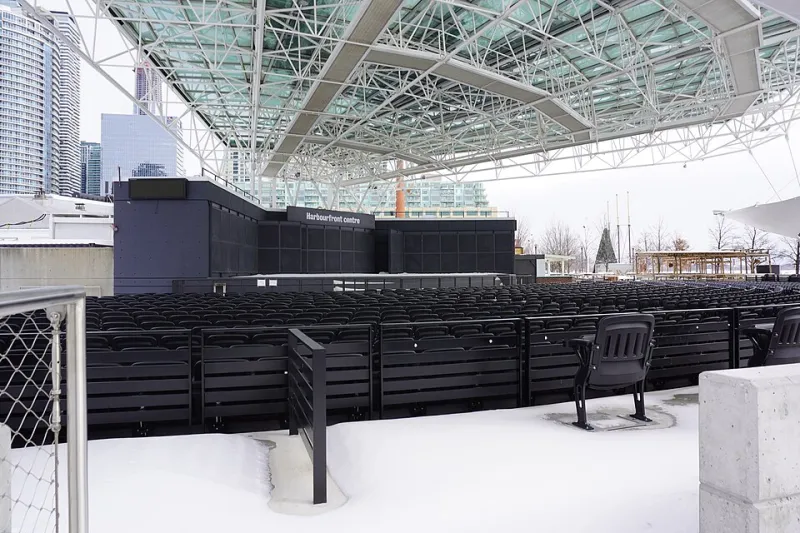
Photo: Qviri, CC BY-SA 4.0, via Wikimedia Commons
The encore ends at 11:47. By 12:05, the last stragglers have filed past the merch table and the marquee lights are cutting out. If you're in that crowd, you go home thinking the show is over.
For about forty people inside the building, the show just started.
The Second Show Nobody Bought Tickets To
There's a parallel production that runs every night in venues across the country — from 400-cap clubs in Portland to amphitheaters outside Chicago — and its opening act is always the same: someone kills the PA, someone else kills the lights, and a crew that's been on its feet since noon starts taking apart everything you just watched.
Truss comes down. Cable gets coiled — over-under, always over-under, unless you want to hear about it. The drum kit that took two hours to tune gets broken down in eleven minutes and loaded into a truck that has to be rolling by 1:30 so the band can make a load-in in Detroit tomorrow.
It's a strange inversion of the show itself. Loud becomes quiet. Chaos becomes choreography. And the energy that was aimed at 2,000 screaming fans gets redirected at a forklift backing up near the loading dock.
What the Floor Remembers
Ask any veteran cleaner or stagehand what the floor tells them about a night, and they'll give you a diagnosis. Confetti means a pop act with a pyro budget. A single flip-flop in the pit means it got weird up front. Beer cans stacked neatly on the soundboard riser means the opener's crew was professional. A cracked floor tom head means nobody on the headlining act's crew checked their cases.
The floor is a receipt. Longtime crew members can walk into a room mid-teardown and tell you the genre, the crowd size, and roughly whether the tour is on its way up or quietly dying — all from the debris pattern.
And yes, the cleaning crew genuinely does know what the band played. Setlists end up everywhere: taped to monitor wedges, crumpled on the stage-left stairs, stuffed in a back pocket of a guitar tech's jeans and forgotten in the green room couch. Some collectors would be shocked how many annotated, wine-stained setlists from famous rooms end up in the hands of the person sweeping them off the deck.
War Stories Live After Midnight
Here's the thing about the overnight crew: the best material never makes it into interviews done in daylight.
There's the club in the Southwest where the headliner's tour manager discovered, at 1AM, that the band's entire backline had been loaded onto the wrong truck — headed for a city four hundred miles in the wrong direction. There's the legendary story, told in a dozen variations, of a power outage mid-encore and the acoustic singalong that followed, lit by phone flashlights, while an electrician worked the panel in the dark.
These stories get traded over the post-loadout meal — usually whatever's still open at 2AM, which in most American cities means a diner, a taco truck, or the drive-thru window that knows the crew by name. That meal is the real green room. That's where the union guys mentor the nineteen-year-old who just discovered that coiling cable wrong gets you politely corrected once and mercilessly mocked forever.
The Economy That Runs on No Sleep
Most of these workers aren't salaried venue staff. They're freelancers and local union calls — IATSE hands in the bigger markets, a rotating crew of trusted regulars at the indie clubs. They get paid by the call, they drive home at 3AM, and they do it again tomorrow, often for a different touring act in a different room.
It's a labor market built entirely on trust and reputation. Touring production managers don't book crews; they book names. If you're the person who caught a falling line array cable in Denver in 2019, that story travels faster than you do, and it books you work in cities you've never visited.
The economics are tight everywhere. Clubs are closing at an alarming rate — the pandemic wiped out a huge chunk of America's small rooms — and every surviving venue is running its overnight crew lean. Which makes these people not just labor, but institutional memory. When a club changes owners, the new owner doesn't get the manual. The head carpenter who's worked the room for fifteen years is the manual.
Why It Matters to the Show You Saw
Here's the part audiences rarely consider: the quality of your night was substantially determined by people you never saw. The reason the changeover between bands took fifteen minutes instead of forty-five. The reason the singer's monitor mix didn't feed back during the ballad. The reason the ceiling didn't come down when the production design called for 8,000 pounds of rigging over your head.
Every great show is two shows. There's the one you film on your phone, and there's the one that happens afterward — quiet, methodical, set to the hum of a walk-in cooler and the sound of someone sweeping glitter off a drum riser at 2AM.
The band gets the encore. The crew gets the diner. And tomorrow night, they'll do it all again in a different city, for a different crowd, with the same extension cords.
So the next time you're walking out past the loading dock and you see a road case with a name stenciled on it and someone in all black drinking cold coffee at the dock door — give them a nod. They already know how the night went. They were there for the part after the end.