Six Channels, One Fuse Box: The Church Basement Mixers Outmixing Nashville
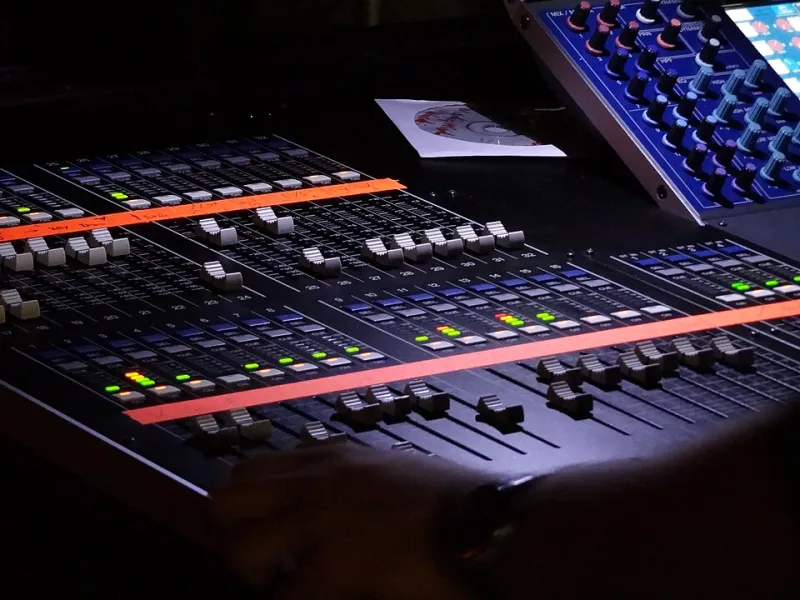
Photo: beeki from Scheeßel, Germany, CC0, via Wikimedia Commons
The sanctuary at First Baptist of Harlan County seats about 300, smells like old hymnals and floor wax, and has a fuse box that predates the moon landing. It's also, if you ask the road manager of a certain mid-tier country act, the best-sounding room they've played all year.
The reason is a 52-year-old man named Dewayne, who learned to mix on a four-channel Peavey head unit running the Wednesday night youth service, and who now handles sound for every touring act that passes through the county fairgrounds, the grange hall, and yes, the church basement.
He has never taken an audio class in his life. He is, by every professional measure, excellent.
The Other Audio School
The standard route into live sound runs through a program — Full Sail, SAE, a conservatory tech track — then through internships at big-city production companies, then up the ladder of corporate rigs and festival stages. It's a real pipeline, and it produces plenty of great engineers.
But there's a second pipeline, and almost nobody writes about it. It's made of people who learned by doing the church service, the school talent show, the VFW fish fry, the tractor pull. No mentor with a platinum plaque. No console worth more than their truck. Just rooms with terrible acoustics, gear held together with gaffer tape and hope, and a congregation that would absolutely let you know if the vocals were buried.
"You can't hide in a room like that," Dewayne told me, standing in the church annex that doubles as his shop. "If the mix is bad, Sister Alma is turning around in her pew and looking at you. That's your meter."
What the informal route lacks in theory, it makes up for in reps. A big-city engineer might mix a handful of shows a month. A small-town guy who covers the church, the school gym, the bar, and the fairground might do four events a week — every one of them in a different, worse-sounding room, with different, borrowed equipment.
Gear Poverty as a Teaching Tool
There's a particular kind of resourcefulness that comes from never having enough. When you own six channels and the praise band has nine inputs, you learn gain structure, prioritization, and the fine art of the strategic instrument cut. When your main PA is two mismatched speakers from a yard sale, you learn to tune a room by ear because you can't afford the analyzer.
The result is an engineer who treats limitations as normal rather than as problems. Hand one of these folks a proper digital console and a line array, and the reaction isn't intimidation — it's a kind of giddy restraint. They've been solving the same physics problems with a tenth of the tools.
"I walked into one gig and the guy had a rack of outboard gear I'd only seen in photos," says a drummer who tours nationally and asked not to name the act. "He patched it in, walked the room twice, and handed me the best drum sound I've had in three years. Then he went back to his day job Monday morning. He's a HVAC contractor."
Why Tours Quietly Prefer Them
Here's the part the industry doesn't put in the rider: when a mid-level act rolls into a small market, they'd often rather trust the local lifer than fly in their own tech. The local guy knows the room's quirks — which outlet hums, where the ceiling cavity rings, which door slams during ballads. He knows the mayor is in the crowd. He has stakes.
There's also the matter of attitude. The informal pipeline produces engineers who treat the gig like a favor to neighbors, not a portfolio piece. Nobody's networking. Nobody's angling for the next festival. They're just making sure the show sounds right for the 400 people who bought tickets, because they know most of them.
Word travels through the touring world the way it always has — crew to crew, in green rooms and loading docks. Certain towns develop reputations. "There's a bar outside Boise," one front-of-house engineer told me, "where the owner's nephew mixes, and everybody in the business knows you don't bring your own rig. Just let him work."
The Fuse Box Problem
It's not all romance. The same resourcefulness that makes these engineers great is often what keeps them invisible and underpaid. Dewayne charges the fair $300 for a full day of production. A city engineer with equivalent ears would bill ten times that. Meanwhile, the church's electrical system remains a genuine fire hazard, and the insurance situation is best described as prayer-based.
Some of these lifers are starting to formalize — LLCs, proper cabling, used digital desks bought off retiring road dogs. A quiet middle class of rural production is forming, one garage full of speaker cabinets at a time.
But ask Dewayne if he'd ever move to Nashville, and he laughs. The sanctuary needs him Wednesday. The fair needs him in August. Sister Alma has opinions, and somebody has to listen to them.