440 Wars: The Quiet Bureaucracy That Tuned Your Whole Life
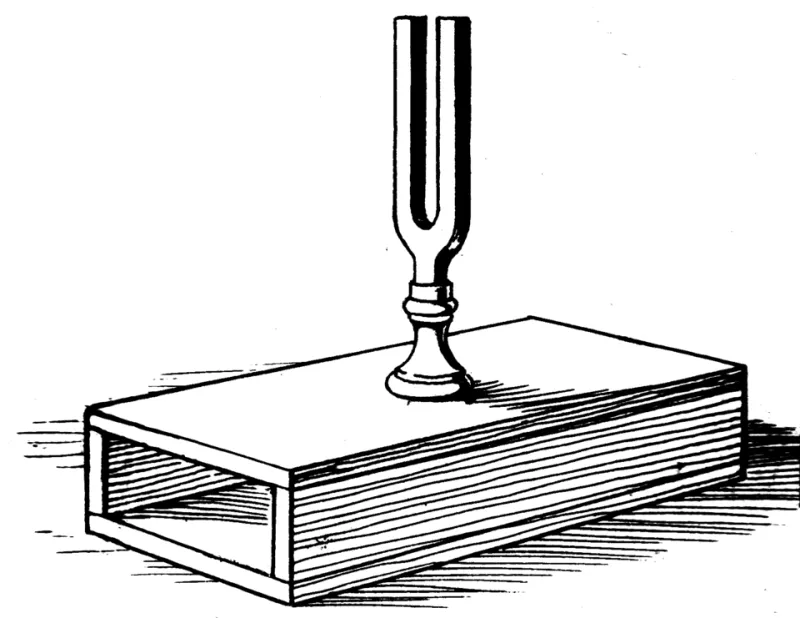
Photo: Pearson Scott Foresman, Public domain, via Wikimedia Commons
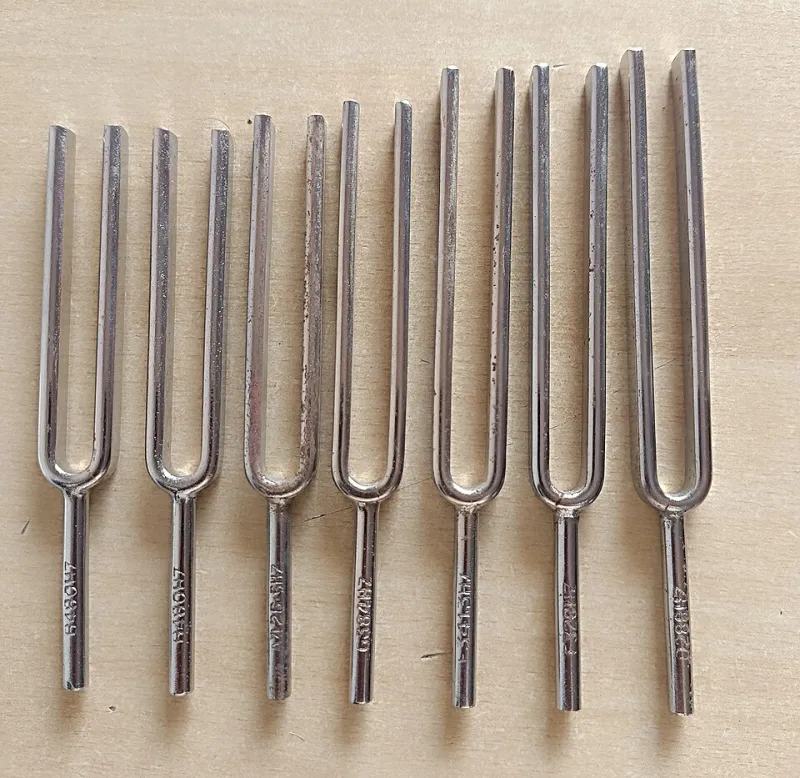
Somewhere in a filing cabinet in Cleveland sits a tuning fork that has outlived every person who originally signed off on it. It vibrates at 440 times a second. If you've ever heard an orchestra, a pop record, a jingle for a regional mattress chain, or your kid's school band butcher "Louie Louie," you've heard its verdict. You just didn't know it was a verdict.
That's the thing about the note A. It feels like gravity — just there, always was, always will be. It wasn't. Somebody picked it. And a small, stubborn, deeply opinionated cast of characters has spent the last century arguing about whether they picked right.
The Meeting That Set Your Ears
In 1939, delegates met in London and formally adopted A = 440Hz as an international standard. The timing was grim — Europe was months from war — but the pitch problem was real. Orchestras had been drifting upward for decades, each house chasing a slightly brighter sound until a soprano in one city and a violinist in another couldn't agree on what the same song even was.
440 won. Mostly. Which brings us to the people this story is actually about: the ones who never really accepted it.
The Holdouts
Ask around the orchestral world and you'll find pockets of resistance that would make a militia proud. Several major European ensembles tune to 442 or even 443Hz for extra brilliance. Period-instrument groups go the other direction entirely, dropping to 415Hz to sound the way Baroque audiences might have heard it — lower, warmer, a little moodier, like the whole orchestra just woke up from a nap.
Then there are the American piano tuners, the unsung field agents of this whole enterprise. Every one of them carries the standard in a folding case. But talk to a veteran tech and they'll tell you about clients — usually pianists with strong opinions and older instruments — who ask for things "a touch below," and the quiet judgment call of deciding how far a touch is. The standard says 440. The customer says otherwise. Guess who wins.
The Engineers Got Involved
Here's where the fight gets modern. Pitch was only half the battle. Volume turned out to be the real turf war.
For years, the loudness wars meant every new record mastered louder than the last, until dynamic range went the way of the dime. Then streaming platforms stepped in with loudness normalization — playback levels evened out across the catalog — and suddenly the arms race was over. A whisper and a wall of sound now arrive at your ears at roughly the same level. Mastering engineers, the people who spent two decades being asked to make things "louder than the competition," got their evenings back.
It's a strange kind of standard-setting: not a committee in a conference room, but a default setting in a server farm quietly reshaping what American music sounds like. Nobody voted on it. Everybody lives with it.
Why Any of This Matters to You
Fair question. You've made it this far without knowing what a hertz is.
But standards are design decisions, and design decisions are invisible until they're wrong. The pitch of A determines how a vintage piano sits next to a modern synth on a Nashville session. Loudness rules determine whether the quiet bridge of your favorite song actually gets to be quiet. The people arguing about frequencies in windowless rooms are, functionally, deciding the texture of the next fifty years of listening — the way an anonymous typographer once decided the shape of the letters you're reading right now.
So next time an orchestra tunes, notice it. That oboe playing A isn't a warm-up. It's a referendum. And somewhere, a guy with a folding fork and a strong opinion is listening to see if the room agrees.