The Last Hum: The People Recording Rooms Before the Wrecking Ball Arrives
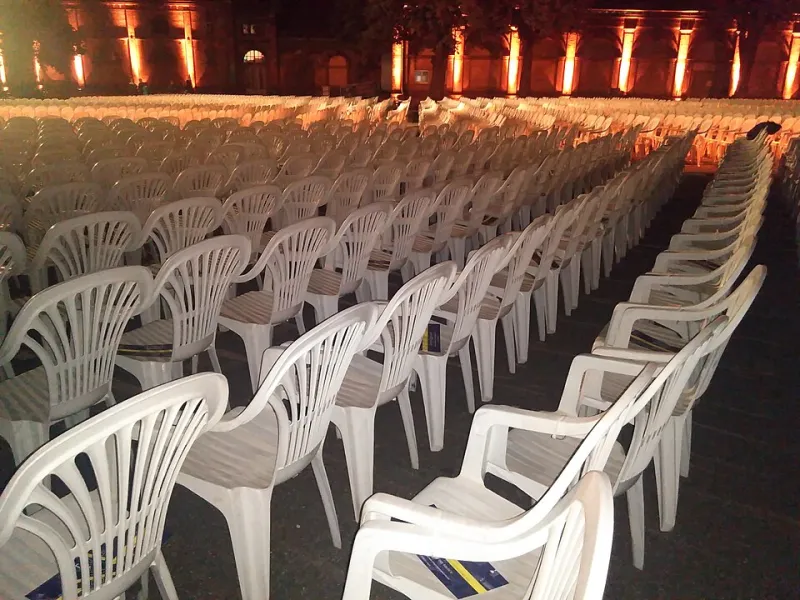
Photo: Hrrg123, CC BY-SA 4.0, via Wikimedia Commons
The recording is almost nothing. Four minutes of a room with no one in it. You can hear the HVAC, a faint electrical hum, the distant wash of traffic through a wall that was never built to keep anything out. To most people it sounds like silence. To the people who collect it, it sounds like a fingerprint.
Silence Has a Fingerprint
Room tone is an old film term. Editors need it to smooth the gaps between takes, a bed of 'nothing' that keeps a scene from sounding like it was cut together. But the same idea applies to any space: a club, a theater, a church basement, a studio live room. Every one of them has a signature — the specific combination of dimensions, materials, wiring, and whatever is humming in the basement — that makes its quiet sound like itself.
Change the room and the quiet changes. Drywall goes up, carpet comes out, a new HVAC unit gets installed, the ceiling gets dropped a foot, and the sound that used to live there is gone. Not damaged. Gone. You cannot reconstruct it from a photo.
That is the problem a loose network of field recordists and archivists across the US has decided to take on, mostly on their own time and mostly without a budget.
The Hum Is the Building
Spend an afternoon with someone who does this and you learn to hear things you cannot unhear. The 60-cycle hum from a badly grounded circuit. The way a wooden stage floor breathes when the air conditioning kicks on. The specific flutter of a room with parallel walls that nobody treated. The way a low ceiling compresses a crowd's noise into something almost physical.
Recordists capture this with a few microphones and a lot of patience. They wait for the building to empty. They ask the staff to turn off the music but leave everything else running, because the everything else is the point. They record minutes of stillness, take notes on temperature and occupancy, and log the address, the date, and whatever the room is about to become.
The notes matter as much as the audio. A file named 'room tone, take 2' is worthless. A file with a building's age, its dimensions, its HVAC model, and the date it was scheduled for demolition is an archive.
Who Owns a Room's Sound?
Here is where it gets complicated. A room's sound is not really anyone's property. It belongs to the owner, in a legal sense, but only because they own the walls. The people who recorded it have a file, not a deed.
That has not stopped the archives from growing. Some of the material ends up in university collections. Some sits on hard drives in apartments, backed up twice and labeled carefully by people who understand that a dead club is often remembered only through photographs and bootlegs — both of which miss the most obvious thing about being there, which is the way the room itself sounded around you.
The archivists are not precious about this. They are not trying to freeze a space in amber. They are trying to make sure that when the next generation asks what a 400-capacity rock club actually sounded like with a crowd in it, someone can answer with more than a memory.
The Archive Problem
Preservation is the easy part. Access is the hard part. A room tone file is not a song. It does not stream. It does not have a hook. There is no obvious place for it in a world built around playlists and short-form video, which is precisely why it is being lost.
Some of the recordists are experimenting with ways to make the material usable. Installations. Documentary sound design. Short films that open with four seconds of a room that no longer exists. A few have started pairing their recordings with the photographs and flyers from the same spaces, building small, local archives that live in libraries and historical societies rather than on streaming platforms.
That work is slow and unglamorous, and it is happening in the same cities where the venues are closing. A club that hosted a thousand shows gets sold, and the new owners put in a smoothie counter, and the room tone of the place ends up on a hard drive in someone's closet, next to a folder of photos of the marquee.
What the Quiet Remembers
The people doing this are not sentimental. Most of them will tell you, if you ask, that buildings come and go, and that the music matters more than the plaster. But they will also tell you that the plaster is part of the music. A band playing a room with a low ceiling and a wooden floor is not the same band that plays a converted warehouse with a concrete floor and a twenty-foot ceiling. The room is an instrument, and it is usually the only one nobody bothers to record.
So they keep showing up. Microphone stands, a laptop, a notebook, and an hour or two before the crews arrive with the dumpsters. They record the HVAC. They record the hum. They record the building doing nothing at all, which is the last thing it will ever do.
Then they label the file, back it up, and go home, knowing that the only proof the room ever sounded like that is now sitting on a drive — waiting for someone, someday, to press play and hear a place that is no longer there.