The Ghostwriters of the Gatefold: Inside the Small Industry Keeping Album Booklets Alive
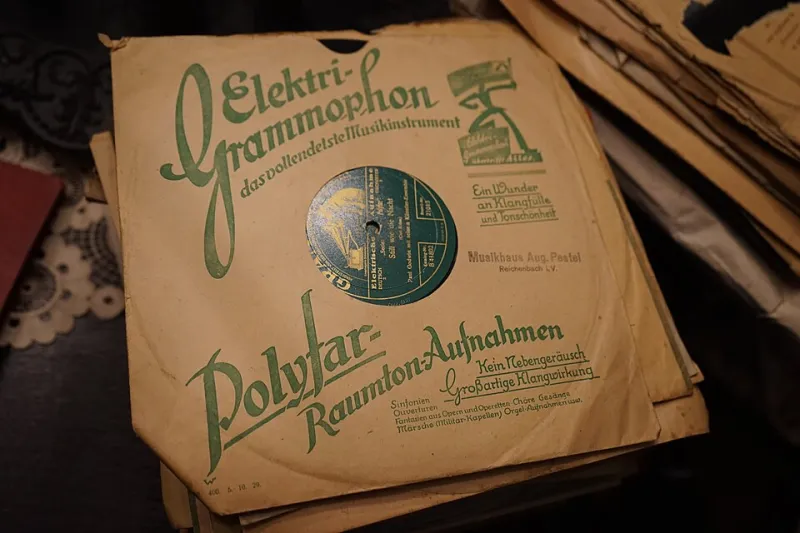
Photo: PantheraLeo1359531, CC BY-SA 4.0, via Wikimedia Commons
Somewhere in Portland, a freelance designer is kerning a lyric sheet at 1 a.m. for an album you won't hear for another four months. She'll never meet the artist. Her name might appear in six-point type on the back sleeve, or it might not appear at all. Either way, when you slide that record out of its sleeve at a listening party in Brooklyn or a bedroom in Austin, her fingerprints are all over the moment.
Welcome to the liner note economy — the small, oddly resilient freelance world that gives physical releases their soul.
The 12-Inch Sales Pitch
Here's the thing about vinyl's comeback: it's not really about the audio. Plenty of audiophiles will tell you a well-mastered digital file outperforms a pressing. What vinyl sells is context. The ritual. The bigness of it. And that bigness has to be designed by someone.
"A CD booklet is a pamphlet. A record sleeve is a poster you can hold," says a Los Angeles-based art director who's worked on reissues for two major labels (she asked to stay semi-anonymous — more on that culture in a second). "When a label calls me about a reissue, they're not asking me to make a package. They're asking me to make an argument for why this deserves forty dollars and shelf space."
That argument gets more expensive every year. Pressing plants from Discmakers to the independent facilities in Nashville and Czechia are booked months out, vinyl prices keep climbing, and labels have responded the way labels do: by making the object more elaborate. Gatefolds. Foil stamping. OBI strips. Booklets that are honestly small photo books.
Which means someone has to fill all that real estate. Enter the freelancers.
Who Actually Writes This Stuff
The roster behind a typical deluxe release looks like a mini film crew: a creative director, a package designer, a photographer, possibly a typographer, and — the role most people don't realize exists — a liner note writer.
Liner note writers are the essayists of the physical release. They interview the artist, dig through session archives, call the retired engineer who mixed the album in 1978, and produce the 1,200 words that justify a deluxe box set's existence. Think of the essays in Rhino's reissues or the sprawling booklets that accompany Legacy Editions. Somebody wrote those. Usually on deadline. Usually for a flat fee.
"The best compliment I can get is when someone reads the notes before they listen," one Nashville-based writer told us. "That means I did my job. I set the table."
It's freelance work in the truest sense — project-based, reputation-driven, and paid per package rather than per hour. Rates vary wildly: a few hundred dollars for a standard booklet essay, four figures for box set work, and for the top-tier writers whose names music nerds actually recognize, a comfortable mid-five-figure annual hustle across multiple projects.
Why Labels Are Calling Again
For about fifteen years, this economy was on life support. Downloads killed booklets; streaming killed the idea of a booklet. Designers we spoke to described the 2010s as "the wilderness years" — everyone pivoting to playlist art and social assets, gatefold skills atrophying.
Then two things happened. Vinyl sales in the US crossed fifty million units annually and kept going. And Gen Z started buying records they openly admit they don't play.
"The collectible market changed everything," our Portland designer says. "Labels realized the package isn't packaging anymore. It's the product. So suddenly they want the good typographer back. They want the essay. They want archival photos. The budget line item that died in 2012 came back from the dead."
Labels like Light in the Attic in Seattle and Numero Group in Chicago built entire brands on this ethos — treating the sleeve, the notes, and the archival digging as the main event. Their success made the majors pay attention. Now even pop releases ship with poster inserts and lyric booklets, and every one of them needed a freelancer on the invoice.
The Anonymous Credit Problem
Here's the friction in this renaissance: credit is inconsistent. Some designers get their name on the back sleeve and a full bio in the booklet. Others get a line in a label's internal PDF and nothing else. Liner note writers, who are essentially ghostwriters with a byline culture that never fully materialized, often see their work reproduced on fan wikis and Discogs pages with no attribution at all.
"There's a weird shame culture around it," one designer admits. "Nobody wants to be the person demanding credit on a project where the artist is the story. But we're not asking for a billboard. We're asking for six-point type."
The freelancers we spoke to aren't bitter — the work is genuinely fun, the clients are generally music people, and there's no shortage of projects right now. But there's a quiet push, mostly happening in group chats and Discord servers, to standardize credits the way film crews standardized them decades ago.
Why It Still Matters
Strip away the nostalgia and there's something real here: a record sleeve is one of the last mass-market objects where design gets twelve full inches of undivided attention. No scroll. No skip. Just you, a piece of cardboard, and someone's deliberate choices about color, paper stock, and which outtake photo makes the cut.
The people making those choices are freelancers working project to project, mostly invisible, occasionally credited, always on deadline. Next time you pull a record out and think wow, this feels like an event — that feeling was manufactured. On purpose. By somebody whose name you should probably read all the way to the bottom of the sleeve for.
They're there. In tiny type. Doing their job.